
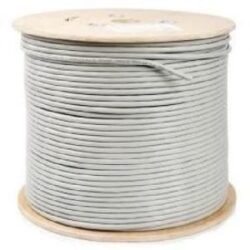
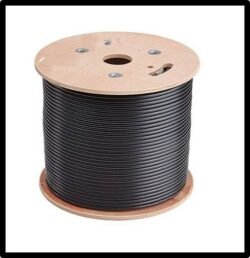
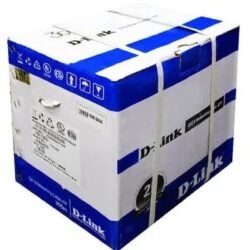
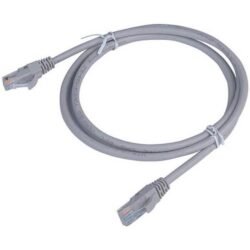
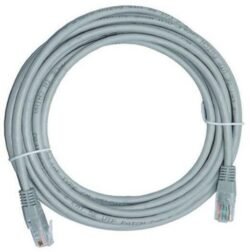
Cat6 Cables
Price range: KSh 5,300.00 through KSh 14,800.00 Ex.VAT
This product has multiple variants. The options may be chosen on the product page
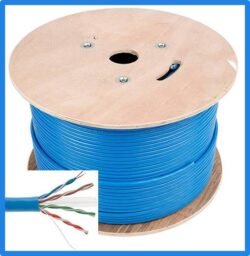
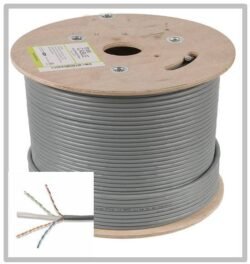
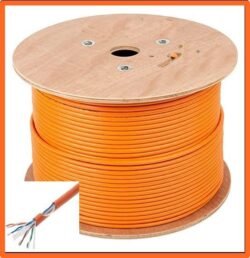

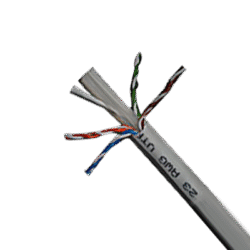
-18%
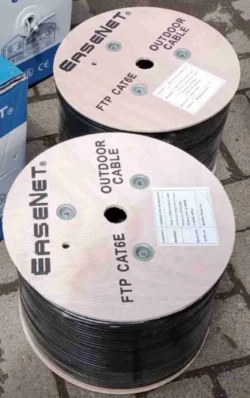
Original price was: KSh 22,000.00.KSh 18,000.00Current price is: KSh 18,000.00. Ex.VAT
The primary difference between cable categories lies in their maximum speed, bandwidth (frequency), and shielding capabilities.Ethernet Cabke buying guide and Key Categories and Use Cases
| Category | Max Speed | Max Bandwidth | Max Distance | Typical Use Case |
| Cat5e | 1 Gbps | 100 MHz | 100 meters | Home networks, small offices, general internet use |
| Cat6 | 1 Gbps (at 100m); 10 Gbps (at 55m) | 250 MHz | 100 meters | Gaming, 4K streaming, small to medium businesses |
| Cat6a | 10 Gbps | 500 MHz | 100 meters | Enterprise networks, data-intensive applications, future-proofing |
| Cat7 | 10 Gbps | 600 MHz | 100 meters | Data centers, industrial settings with high interference |
| Cat8 | 25-40 Gbps | 2000 MHz | 30 meters | Data centers, server rooms, ultra-high-performance computing |
- Speed Requirements: Match the cable's capability to your internet plan and internal network needs. Cat6 is suitable for most modern homes, while Cat6a or higher is better for demanding professional environments.
- Distance: All standard twisted-pair Ethernet cables have a maximum effective length of around 100 meters (328 feet) for basic Gigabit speeds; for higher speeds (10 Gbps+), specific cable categories (like Cat6a) are needed to maintain performance over the full distance.
- Environment and Shielding: In areas with high electromagnetic interference (EMI) from appliances or machinery, shielded cables (STP/FTP, common in Cat7 and Cat8) are recommended to prevent signal loss. Unshielded twisted pair (UTP) cables are standard for most home and office use where interference is minimal.
- Conductor Material: Pure copper cables offer superior conductivity and durability for permanent installations, while less expensive Copper Clad Aluminum (CCA) options may be suitable for light, temporary use.
- Connectors: Most modern cables (Cat5e, Cat6, Cat6a) use the standard RJ45 connector, ensuring broad compatibility with routers, switches, PCs, and other devices. Cat7 and Cat8 sometimes use different connectors (GG45 or TERA) but are generally backward compatible with RJ45 ports.